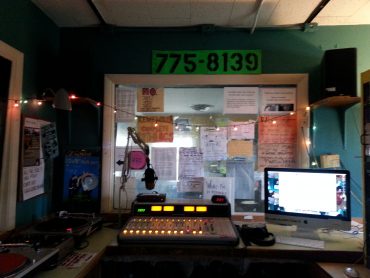
Language Lab Unleashed! header image

You just gotta want it.

4 May 2008 · 8:00 pm · Barbara · 2 Comments ·

I was talking with a student who works in our center on Friday and he reported that he had slept about 2 hours in the past 24 or so, studying hard, and yet he was still not caught up on the work he had been assigned to do for the end of the semester. It was as if, he said, the teachers realize there are only 10 more days to go and therefore have to cram everything into the syllabus (and into the students’ sleep-deprived brains) in order to get to the finish line.

But does anyone actually learn anything when this happens? Does anyone ever stop and take a look to see if learning really occurs in those last frantic days before the term ends?

I know of one faculty member who front loads his class…all of the heavy lifting is at the beginning of the semester because he knows that the end of the semester is when people get hammered by all of their other profs. Plus it is springtime here… springtime in Ohio feels like a huge reward after winter and many weeks of almost-spring in Ohio…and it is hard to work when the weather is so fine.

But why do we tend to burden our students (and ourselves!) at the end of the term if we know deep down that they forget almost everything they cram under duress? I have that wonderful recurring nightmare about being told I need to retake my Algebra 2 final in the 10th grade because “they” need to see if I was just parroting my answers or if I really truly understood the concepts. I wake up in a cold sweat every time. I wonder if other people have those same dreams when they teach.

In language education there is a debate about “learning” vs “acquiring” a language that seems appropriate to mention here. If you “learn” something, it is in your short term memory…and not for long. But if you “acquire” it, that means what you have learned has become permanently welded into your brain, something you can rely on being there for the long haul.

How one goes about “acquiring” a language is a bit of a mystery, and it varies from person to person. Everyone has their way of moving along the language acquisition continuum. But one thing theorists are saying with certitude is that cramming a second language rarely leads to language acquisition.

So why do we do this to ourselves and to our students? Why do we, time and time again, create syllabi that are chock-a-block full of tasks that are impossible to accomplish wisely and well?

I understand the logic that says that in Spanish 101 you need to teach the first half of the book because Spanish 102 (the next course in the series) will begin at the second half. So you had better hurry up and get there… and cover it all, dagnabbit.

But if people would just stop and look up for second they would see something: the first two chapters in Spanish 102, that is the middle two chapters of the textbook, are usually REVIEW chapters. And what do they review? Why, the stuff from the last two chapters that they know most people jet-skiied right through in order to get to the end of the semester.

In my mind, the really good teachers are the ones who can follow the syllabus but also figure out when the class needs or wants to go deeper into the material and then helps them do so. S/he also is able to articulate what the intended outcomes of the class are meant to be w/o being wedded to a syllabus and then helps to get everyone there, alive and in one piece and able to reflect upon what they have acquired along the way.

But where does that courage come from? The courage to say, um, hold on here…this is not working. The courage to stop, reflect, look around, assess and redirect. These are all things that folks like McKeachie and Skorczewski have asked us to do…but we don’t Do it. Why?

Ryan and I were having our weekly staff meeting and he came up with this thought: for any change to happen, any real change… you just gotta want it. How true. And once you want it, really want it, and once you can clearly articulate why you want it, and once you can articulate what you want the outcome(s) to be… the rest all falls into place.

This time of year we all feel and act like automotons…we are going through the motions, one foot in front of the other. Once the summer comes and the blood begins to coarse through our veins again, my hope is that everyone will stop and think for just a moment about where they want their students to be, what they want them to be able to do, by the end of the next term. Resist the temptation to pull out the same ole crusty syllabus. Resist the temptation to go through the motions and the patterns of the past.

Be bold: Just gotta want it.

Tags:

But could you do this without Ryan??

2 May 2008 · 3:20 pm · Barbara · 2 Comments ·

Yes it has been a while since I have blogged, I admit it. There is this pesky little thing called the end of the semester that we are dealing with which, as we all know, is the time when technology (yes I am talking to you Dell Profiles) and time sort of collapse and compress into nothingness.

I will write a but more about my wonderful HISP205 class in a bit, but I thought I would share a little bit about the presentation I did on blogging this afternoon for a small group of faculty as part of a CTIE Brownbag.

This marks the first time I have actually talked about blogging on my very own campus. I debated for a while as to how “Mad Dog Ganley” I needed to be, and when I saw it was a small group I figured I could retract my talons.

Sigh, not so fast.

The presentation went fine. But curiously these were the responses from one member in the audience:

1) “I can see how this works for languages…but can it work for other subjects?” Hmmmm. I had to push pretty hard to have this seen as a viable component of the language curriculum… in fact, to do so I took what I saw happening in OTHER disciplines and tried to apply it to language instruction. And I have my HISP305 and 205 classes to thank for making it happen so wisely and well. So, yes it is possible elsewhere and that’s actually where edublogs began: in disciplines other than languages… check the blogroll here for some examples that I pulled together for the session. Science, history, creative writing…they are all there.

2) “But could you do this without Ryan?” The thought process here is such: There must be so much heavy lifting in installing those tools that you need a dedicated individual at the ready 24/7 in order to make this happen. A boy Friday. A Robin to your Batman.

Robin the Boy Wonder

This second comment is pretty perplexing. And I might add, a bit hurtful too. First of all, it presumes that all of the heavy lifting, hard work, time-on-task that social software requires is on the server, machine, hardware end of things. That is not to say there are not lines and lines of code that need to be written mangled and undone (did I say mangled? no wait that’s my job) Indeed that needs to be done and is done. And quite well I might add… many snaps to Ryan for streamlining the WPMU process for us such that it is so effortless…. that was no small feat.

But there is more to teaching effectively with social software than just installing php and mysql properly and well… If you create a blog, it does not mean that anyone will come to your blog or that your students will use it for learning. You have to know what you want the outcome of this endeavor to be before you even get started. It takes work and effort to teach effectively with these tools.

If you are not willing to wrestle with the idea of an emergent classroom, a student-centric, passion-driven, “oh my goodness did you read the comment he got from Chile on his blog?” type of a learning environment, then this is not for you. Fine. But please don’t dismiss us because you might not really understand what we do or how we do it. Please don’t rob us of the pride we have in the accomplishments that we have made over the past three years. We are good at what we do and are proud of what we have created together, even if it might not make immediate (or any) sense to our colleagues.

I am beginning to see how fearful some folks become when we talk about thinking about teaching differently. Yes, fear… here within the very same place that markets itself as otherwise.

So the short answer is yes, this can be done without Ryan, and in fact Ryan is working hard to make it so he can find more useful ways to spend his time vs hand coding class blogs (read: tis otherwise a waste-o-time… computers are here to serve us and automate tasks…punto).

It’s not about the tools…it’s about the teaching.

Baby Batman

Holy cow, Batman. Get real.

Tags:

Fear 2.0, Web 2.0, and Study Abroad

30 March 2008 · 9:41 pm · Barbara · 2 Comments ·

I am enjoying the wonderful free wireless at the Harrisburg PA airport (with ample availability of power outlets!!!) while awaiting my flight back home from a NITLE sponsored event on Enhancing Study Abroad using Web 2.0 tools. These events provide an opportunity to see some old friends but also a chance to see some folks whom I might not normally meet. These are faculty/staff/administrators of liberal arts colleges/universities. As often happens with NITLE events, the conversations are interesting and intriguing (and yes, sometimes frustrating) for many reasons.

The overall theme of the meeting was how technology is changing the face of study abroad programs: not only is it changing (enhancing? taking over?) our students’ experiences abroad (cellphones, internet cafes, digital imagery, etc), but it can be utilized to facilitate their re-entry. A second subset of this re-entry conversation, interestingly enough, was how schools could use our students’ experiences (selectively) to market the very study away programs they attended. That’s the part where people began talking turkey… marketing these programs is often essential to their own survival. As one participant put it quite bluntly: when the student comes back from study away “I don’t care if you are the walking wounded…I want you on my website.”

Well, okay then.

When the “adults” get together and talk about “the kids” and technology, there are usually three different types of individuals that emerge. First we have the folks who see the benefit of putting the technology in our students’ hands and letting them explore and create and collaborate (note: these folks are usually seated on the perimeter or in the back of the room…). Then we have the adults who apologize from the get-go for being luddites and behind the technological 8-ball but are still willing to try to wrap their brains around the tools and technologies albeit slowly and cautiously. And then there is the final group that understands just enough about the tools that they are fearful of what might happen if they get used too much, and almost instinctively they react by wanting to control (filter, parse, screen, spellcheck, edit) whatever information these tools allow our students to create.

It’s this last group that worries me. They seem to be threatened and worried of “what those kids might say” if we let them tell their own tales. Eegads… might it be the same stuff they post to Facebook? Oh my, we don’t want THAT on our study abroad website!

Fear forces people to retreat to the familiar, to replicate old models of doing things with these new tools (e.g. imposing teachers’ demands on the content being created, or catering content to external marketing demands, or sanitizing the content via a gatekeeper) …and then they wonder why there is no traffic to their sites. Individuals start their own digital repositories just to be “careful” and then lose out of the power of joining in an established, large, multifaceted group like REALIA or IDEAS.

In short, they want that pesky genie to go back into the bottle and stay there until they have all of this change sorted out and rationalized in their brains.

I feel for these people but I am also wondering: Would it help if they understood WHY social software was created in the first place (and why it has been so quick to take off)?? Maybe if they realized that one of the principal themes of the communities that use these tools is that EVERY voice counts…the good, the bad, the unfiltered, the grammatically challenged… because it is a valued piece of the whole (but by no means representative of the whole all by itself).

Social software allows us to communicate when and where we feel the need and the desire to do so… if it is important to the writer, then it will be twitted or blogged or skyped with remarkable candor, (com)passion, vitality, verve…. It is that passion that troubles some of our colleagues: what will it look like? Will it be messy?

“Even those of us experimenting with progressive pedagogical practices are afraid to change” –bell hooks

Change is hard, especially when it broadsides you and challenges your perception of how things have been done in the past. Fear is problematic only when it causes you to shut down and tune out any and all opportunity of learning more. But skepticism, doubt, concern… those emotions are totally normal when facing something new, different, challenging. Rattling your own cage and learning something new is good for the soul. But hey…isn’t that why we work in educational institutions…to learn more???

The folks I got to know this weekend (thankfully) did not seem to want to close out any opportunities, and they were willing to think about the possibilities. The real challenge for each of them will be when each of them go home and try to preach the gospel to their much more Fearful colleagues.

Change

Poster created by Dr Peter Shaw’s well-read (!) graduate students on the wall of their classroom at the Monterey Institute of Int’l Studies.
(foto credit: Judi “Pepsi” Franz)

Tags:

Calling all K-12 language teachers (a.k.a. one of the hardest teaching jobs out there): Please share your stories!

26 March 2008 · 7:23 pm · Barbara · 4 Comments ·

Prior to coming to my current job in higher ed and language learning technology, I taught in a grade school. Grades 7-12 to be exact. The wonder years. (I now realize how wonderful they are, and how awesome my colleagues were then, now that I have kids of my own in that age bracket). To each ofmy colleagues in higher ed who complains about how hard s/he works, to you I say you ain’t seen nuttin’ ’til you have worked for a year (or in my case eight years ) as a grade school teacher. We used to joke that teachers had summers off because they needed until around July to begin to feel the blood coarsing through their veins after the academic year was over. Sadly, this was not all that far from the truth…

time on task

Where I worked, a teacher’s job was divided into fifths: 4 of those fifths corresponded to your teaching load, and that other fifth was your service to the school. That service could take many forms… being the yearbook advisor, coaching 9th grade girls soccer team, community service project leader/driver…or as was my case: creator, developer, maintainer and faculty trainer for the digital language learning center.

Quite often the scenario for creating a language center goes something like this: A school –in the form of an administrator or a funder– decides it wants to create a language learning center (often because the rival school or district has something in place already). Someone is volunteered (!) to do the research on what the options might be. A timeline is created, usually involving major miracles, divine intervention and the creation of a 30 hour workday. (Most common scenario: you have 6 months) Faculty member dedicates summer to the task. The center is built. A request is made for additional staffing to support the new center, but the creator/developer makes it all look too easy, resulting in this task being tacked on to someone’s work-pie chart as a fifth.

But now that you have a center, you have to use it…and use it well. The pressure is on! Someone has to keep on top of the new tools and tricks and …and…and… Funding is tight or non existent for conferences. Also, in order to attend a conference you either have to either:

–get a substitute teacher for your class –at the school’s expense– if the conference is when school is in session

OR

–you have to give up life-sustaining vacation and/or weekend time to attend.

When I was a beginning my career as a teacher-technologist in that world, I can remember staying up very very late at night exploring tools while the house was quiet and when my correcting and planning was done. Anyone remember CU-CMe from Cornell University? (Apparently Radvision bought the tool…let’s hope the original developers made gazillions on that sale.) I would explore CU-CMe for hours, and eventually found a language teacher in Japan with whom our Japanese class eventually “chatted” online. And thus it began…. :-)

This was waaaay before we had things like blogs, wikis, skype and websites that encouraged collaboration… To get information on language learning technology back then (the Dark Ages, yes I know) you had to belong to a group (and often pay for that privilege) or you had to go to meetings. It wasn’t easy.

Three years ago had this hair-brained idea and created LLU as a way to share information, to follow up on ideas presented but not fully explored at conferences, to create meaningful conversations about interesting ideas, and to form a community of practice and group of willing practitioners through a common, shared virtual space (yer lookin at it). Right now we tend to focus on higher ed language learning, but you know what? The perils and the concerns we face at this level are really no different than what I faced in grades 7-12. Honestly? It’s the same issues…just with bigger bodies. In fact, I often think about how my teaching and how my students learning would have been enriched had I these the community of learners and teachers that frequent LLU when I was teaching so long ago….

If you are a K-12 language teacher… please leave a comment and tell us about yourself. What are your concerns? Is my depiction of the grade school language teaching with technology experience accurate.. or am I totally full of hot air? Let us know your thoughts.

Plus…How can this site be more helpful to you? Please let us know. We welcome your participation!

Tags:

Blogging from CALICO: CALL Needs a Disciplinary Track Record (a.k.a. “Don’t fear the Metadata”)

21 March 2008 · 4:16 pm · Doug · No Comments ·

Nina Garrett, CALL doyenne par excellence, has (yet again) hit a home run with her call for practitioners and publications to “establish a disciplinary track-record that will allow old-timers and newcomers alike to understand how language pedagogy has and has not changed with changing technologies and how earlier materials and research can be recognized as basic to current theory, practice, and research.”  She gave great examples of how researchers and developers have in essence, been delivering “the same pedagogy as materials in earlier formats” because they were “unaware of similarities in pedagogical purpose or of the research conducted earlier” leading to “a kind of ‘reinvention of the wheel’ that undermines the seriousness of CALL”.

<applause>It is about time someone came out and said this here!</applause>

While I might take issue with not emphasizing strongly enough the need to develop new (rather that to apply “old”) frameworks, concepts and theory, there is an urgent need for CALL researchers and practitioners to deeply understand CALL history, and for the profession to  take itself seriously by making its past easily accessible and searchable online via metadata.

I know that IALLT is doing something about this. Is CALICO? EUROCALL? Anybody else?

Blogged with the Flock Browser

Tags: